


News
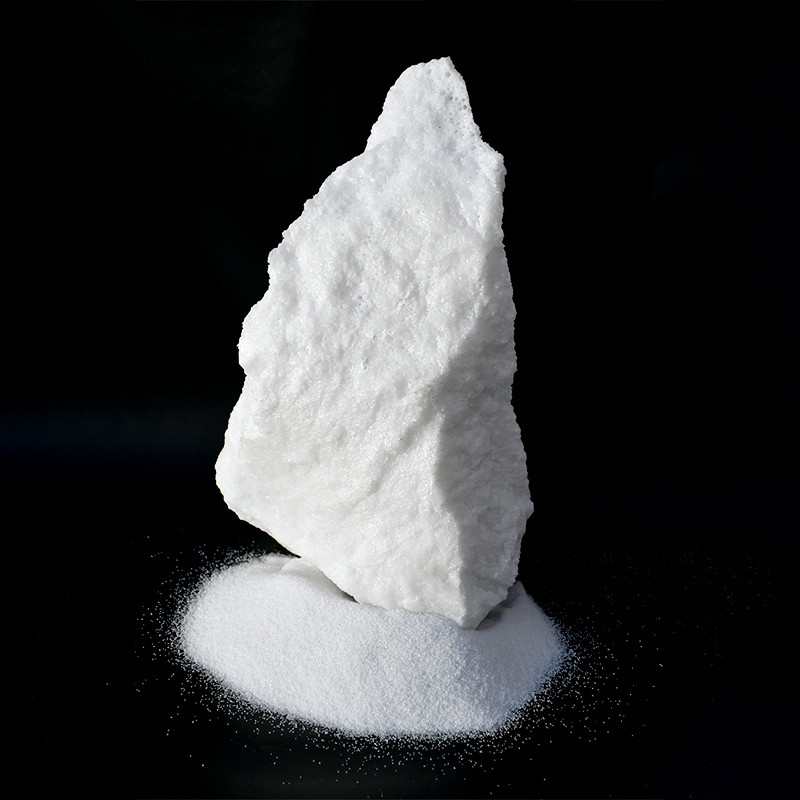
As a core raw material for abrasives and refractories,white fused alumina has a quality that directly affects processing efficiency and product performance。This article builds a systematic selection framework from three dimensions:composition analysis,physical properties,and application compatibility,helping users accurately identify high-quality products。
I. Composition analysis:a dual test of alumina purity and impurity control
Grading standards for alumina content
According to the GB/T 2478-2008 standard,industrial-grade white fused alumina must have an alumina content of ≥99.0%,while specialized applications(such as semiconductor wafer lapping)require ≥99.6%。Taking WA-grade white fused alumina produced by a company in Henan as an example,its alumina content reaches 99.8%,and the impurity Na₂O content is below 0.2%,significantly improving the material’s resistance to acid and alkali corrosion。
Impurity control technology
The magnetic separation iron-removal process can reduce the iron content from 0.15% to below 0.03%,meeting the zero iron contamination requirements for aerospace titanium alloy processing。Acid washing treatment can remove alkaline impurities such as silicon oxide and calcium oxide,further improving product purity。
II. Physical properties:synergistic optimization of particle size distribution and bulk density
Precise control of particle size distribution
Tested with a laser particle size analyzer,high-quality white fused alumina must meet the range requirements of D10≥90μm,D50=180±10μm,and D90≤280μm。For F220-grade white fused alumina produced by a certain company,its particle size concentration reaches 95%,effectively reducing surface scratches caused by coarse particles。
Correlation between bulk density and true density
Bulk density reflects the compactness of particle packing,and high-quality white fused alumina must have a bulk density of ≥1.85g/cm³。True density(3.95-4.0g/cm³)reflects the inherent densification of the material,and together they determine the wear resistance and service life of grinding wheels。
III. Application compatibility:precise matching from processing requirements to environmental conditions
Parameter matching for grinding scenarios
In high-speed steel grinding,F120-F220 grade white fused alumina is selected,and its Mohs hardness of 9.0 and self-sharpening property can achieve a surface roughness of Ra0.2μm。For ceramic substrate polishing,W7-grade micro powder(particle size 14-20μm)combined with magnetorheological technology can improve surface flatness to λ/10(λ=632.8nm)。
Chemical stability in refractory material scenarios
In a high-temperature environment of 1700℃,the linear expansion coefficient of high-quality white fused alumina is only(7-9)×10⁻⁶/K,significantly lower than that of fused brown alumina(8-10×10⁻⁶/K)。After a steel mill used white fused alumina-based castables,the ladle service life increased from 80 heats to 240 heats,and the cost per ton of steel decreased by 35%。
Environmental protection and safety performance
Low free-silica white fused alumina(SiO₂ content<0.1%)can avoid the risk of silicosis,and its lower explosive limit(LEL)for dust reaches 120g/m³,far higher than that of ordinary abrasives。In stainless steel polishing,HACCP-certified white fused alumina products can ensure heavy metal leaching<0.5ppm。
IV. Quality verification:closed-loop verification from laboratory testing to on-site trials
Laboratory testing system
An XRF fluorescence spectrometer is used to test alumina content,with an error range of ±0.1%;particle size distribution is verified by both the sieving method and the sedimentation method;a thermogravimetric analyzer(TGA)is used to test the mass loss rate at 1600℃(high-quality product<0.3%)。
On-site trial evaluation
In casting,a sand mold hardness tester(HBW)is used to test molding sand strength,and high-quality white fused alumina can increase molding sand strength by 20%;in sandblasting operations,processing consistency is evaluated by comparing data from a surface roughness tester(Ra value)and a profilometer(Rz value)。
Selecting high-quality white fused alumina requires building a three-dimensional "composition-physical-application" evaluation system。For fields such as semiconductor processing,ultra-pure grade products with alumina content ≥99.6% and particle size concentration ≥95% should be preferred;while in heavy machinery grinding,purity requirements can be appropriately relaxed,with emphasis placed on the balance between bulk density and self-sharpening property。By establishing a supplier whitelist and implementing batch traceability management,quality risks can be further reduced,achieving a match between material performance and processing benefits。
News

Online Message
*We respect your confidentiality and all information is protected.